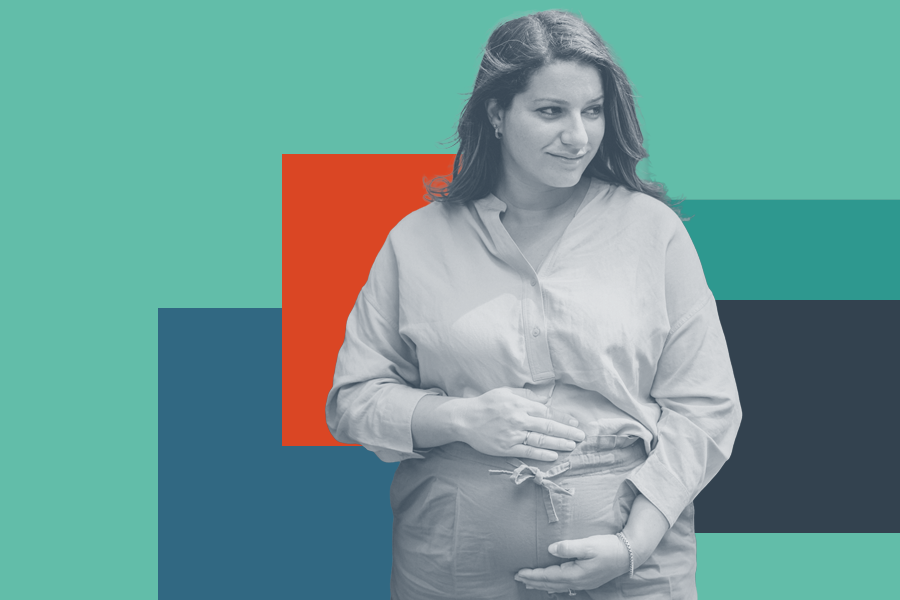
Pregnancy affects people in very different ways.
Some employees experience few health issues, while others deal with sickness, pain, fatigue, or complications. Employees may not always feel comfortable sharing what they’re going through, particularly if they worry about being seen as a burden or about how it might affect their job or career.
Did you know? Pregnant employees often continue working when they’re unwell and may even work harder than usual to counter stereotypes about being less productive. This can mask support needs and increase the risk of poor health and burnout.
“In the beginning, sort of the first trimester for sure I was sick a lot… I’d just be getting ready for work and then being sick and feeling like you have to get there anyway.” (Ella – Employee, 10-49 staff)
Reasonable adjustments
Small, practical changes can often make a big difference in managing sickness during pregnancy, for example:
- Temporary changes to working hours or patterns
- Home working where possible
- Adjustments to tasks (e.g. avoiding high-risk environments or heavy lifting)
- Providing additional equipment
“We work in an office so there is a lot of sitting in front of computers… [During my second pregnancy] we had our standing desks which really helped me to be able to stand rather than sit all the time. (Sian – Employee, 10-49 staff)
Starting maternity leave early
In some cases, pregnant workers must start their maternity leave earlier than planned for health reasons. In such cases, managing their absence and working out their leave entitlements and pay can be quite challenging.
Steps to take
- Employee provides medical evidence: The employee should provide a doctor’s note, such as a MAT B1 form, stating the need for early leave due to a pregnancy-related illness or health and safety risk.
- Maternity leave starts automatically in the last 4 weeks: If the employee is off work for a pregnancy-related illness in the four weeks before the due date, their maternity leave starts automatically.
- Employee informs the employer: The employee should inform the employer as soon as possible that they have gone off sick due to their pregnancy, and that their maternity leave is starting.
- Employer must pay maternity pay: Once maternity leave begins, the employer must pay maternity pay instead of sick pay.
- Health and safety risks: If the reason for early leave is a health and safety risk, the employer should first try to remove the risk or offer alternative work (see Reasonable adjustments – add link), or suspend the employee on full pay.
- Employee’s decision: In some cases, the employee may have the option to start maternity leave earlier, but the final decision on the start date rests with the employee, unless they are absent in the final four weeks of pregnancy.
For more detailed information on starting maternity leave early, please visit the Acas website.
Here, you can also find information on what to do if the baby arrives early, requires neonatal care, or arrives late.
Supportive practices
- Workplace culture and communication make a real difference in how sickness during pregnancy is experienced. Open, empathetic conversations help managers understand what support is needed and when adjustments might be helpful.
- In small teams, balancing compassion with workload pressures can be difficult. Our research suggests most employers try to be flexible, but practices vary. Informal flexibility can help, but it can also create uncertainty. Clear agreements about time off, adjustments, and expectations reduce confusion and stress for everyone.
- SMEs often need to balance compassion with the realities of running a small business. Readjusting tasks and working patterns in small teams can be difficult (see Limited Resources).
“It’s important that as a company we know what it [the condition] is. Not with a view to criticising, being critical of them, but so that you can make reasonable adjustments.” (Mike – Employer, 10-49 staff)
“[My employer] is a big believer in looking after yourself and your wellbeing and then everything else will follow. So, when I’ve had a cold in the past, she’s been really keen for me to slow down and look after myself. So that’s not changed with pregnancy, in fact, it’s probably increased in that she really wants me to look after myself so that the baby is OK. I guess, when you go round full circle, that then means I can also keep doing my job as well as I can rather than being off longer or making mistakes or anything.” (Phoebe – Employee, 1-9 staff)
“I found out my other lady is pregnant, and then she got sick as well. Both of them had a really bad time, and lady number four, she actually took her maternity leave at seven months […]. She had that thing where you’ve got that pelvic pain, and nerves trapping, everything. She just had the worst pregnancy. She was just like ‘I can’t wait for this baby to come’. So, yes, I have dealt with all of that and, basically, I had to just grit my teeth and get through it and get help where I could to keep the team going… to keep the workload shifting.” (Emily, Micro business employer)
What can employees do to help?
They can let you know about changes in how they are feeling, or what support they need, which can help you offer adjustments and avoid risks. Employees shouldn’t have to push themselves to the point of burnout or ill health.
Useful resources:
- ACAS – Your maternity leave, pay and other rights
- ACAS – Time off for antenatal appointments
- Maternity Action – Know your rights: Step-by-step guidance on maternity rights, early birth, neonatal care, and what to do if things don’t go to plan